Your Body's True 401(k): Why Muscle is Your Metabolic Bank Account for a Longer, Richer Life

At 54, Susan is the picture of discipline. Five mornings a week, she’s on the Peloton,
climbing digital hills and chasing personal bests. She’s tracked her heart rate for years,
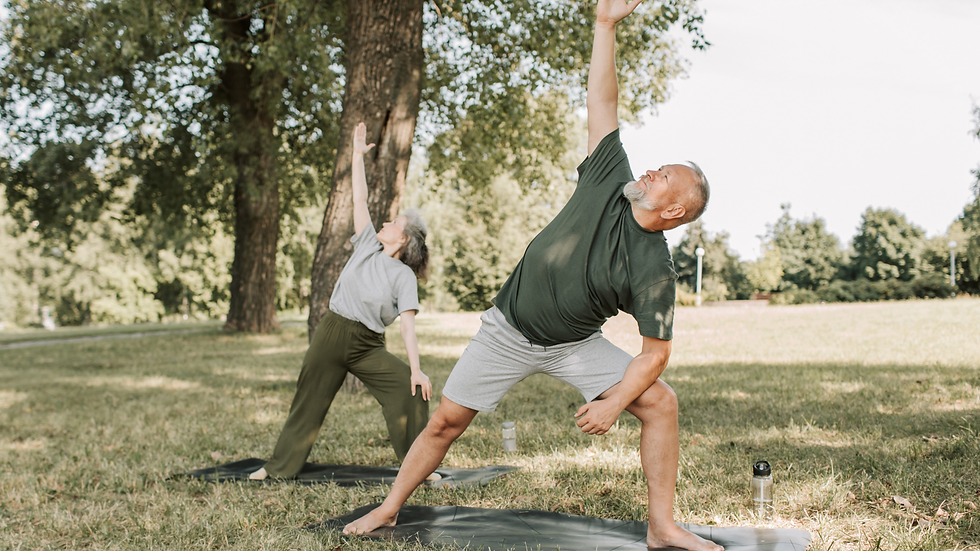
celebrating her cardiovascular fitness. Her diet is clean, her yoga practice is consistent,
and she avoids heavy lifting, fearing it’s a young person’s game that might lead to injury.
She is, by all common measures, doing everything right to ensure a healthy, active
future.
Yet, despite her efforts, a subtle fragility has begun to creep in. A stubborn layer of body
fat clings to her midsection, her energy levels aren't what they used to be, and a simple
fall while hiking last year left her with a sprained wrist that took months to fully heal.
She feels like she’s working harder than ever just to maintain the status quo.
Susan’s story is not one of failure; it's one of a flawed strategy. She has diligently
invested in what she was told was the blue-chip stock of health—cardio—while
completely neglecting the most critical asset for her long-term well-being.
This asset isn’t a strong heart or low cholesterol. It is her muscle.
For decades, we have been taught to view muscle through the narrow lens of aesthetics
or brute force. It was for bodybuilders on a stage or athletes on a field. For the rest of
us, health was about endurance, flexibility, and keeping our weight down. But a
revolution in our understanding of the human body has revealed a profound truth:
skeletal muscle is not just a structural system for movement. It is the single most
important metabolic organ you own.
This article will re-introduce you to muscle, not as a tool for vanity, but as your body’s
true 401(k): a metabolic bank account you must diligently fund throughout your 40s,
50s, and 60s. The "deposits" you make now, through intelligent strength training, will
compound over time, providing the metabolic currency you will need to fight off illness,
resist cognitive decline, and build a resilient body that can carry you through a vibrant,
purpose-driven life for decades to come.
The Great Miscalculation – Why We Prioritize Cardio Over Strength
To understand why a disciplined, health-conscious person like Susan might neglect the
single most important asset for her longevity, we can't just look back; we must look
around. The reasons are a complex blend of historical momentum and the modern
fitness landscape.
The foundation was certainly laid by the "aerobic revolution" of the last century. That
movement correctly identified the importance of cardiovascular health and successfully equated "exercise" with activities like running, cycling, and aerobics in the public
consciousness. This established a powerful, enduring narrative: the path to health is
paved with sweat, a high heart rate, and burned calories.
However, this is only half the story. The legacy of that revolution evolved into the multi-
billion-dollar modern wellness industry, which often steers women away from the very thing they need most. For a woman over 40 today, the most visible and heavily
marketed forms of "acceptable" fitness are often found in boutique studios and at-home
platforms focused on yoga, pilates, barre, and spin classes. These are wonderful
activities that build community, improve flexibility, and provide cardiovascular benefits.
But they are often insufficient for building the level of muscle mass required to serve as
a true metabolic bank account. They maintain, but they rarely build substantial new
tissue.
Compounding this is a problem that is rarely acknowledged in fitness articles: the
intimidation factor of the traditional weight room.
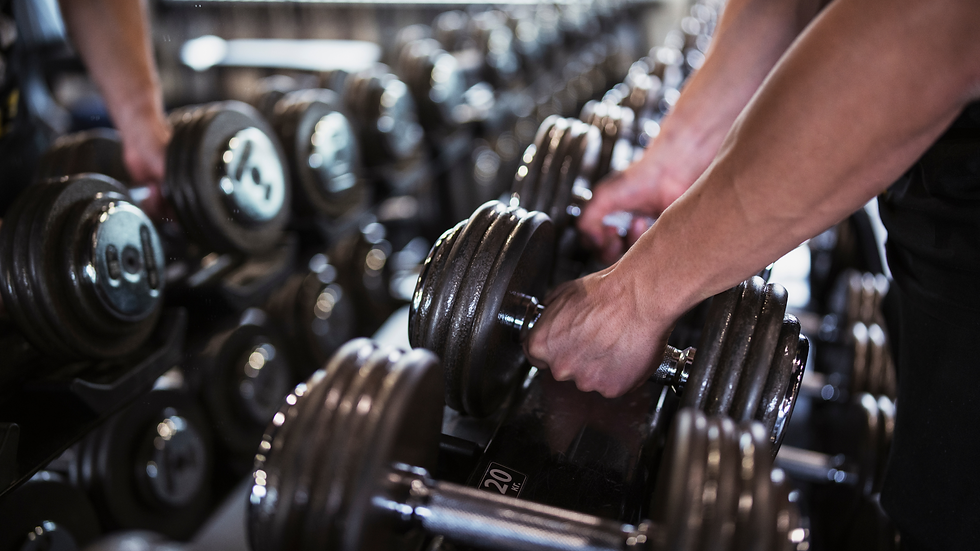
For many women, the free-weight section of a commercial gym feels like a foreign and
hostile territory. It's often a male-dominated space, characterized by clanging weights, loud grunts, and a culture that can feel exclusive and judgmental. The fear is multi-
layered and very real:
• Fear of Injury: "I don't know the right form, and I'm going to hurt myself."
• Fear of Judgment: "Everyone knows what they're doing, and I will look foolish."
• Fear of Harassment: An undercurrent of unwanted attention or feeling on
display.
• Fear of "Getting Bulky": A persistent myth, scientifically unfounded but
culturally powerful, that lifting heavy weights will inevitably lead to an
"unfeminine" physique.
Faced with this, the choice becomes obvious. Why venture into an intimidating,
uncomfortable space when you can join a welcoming spin class or follow a guided yoga
flow in the safety of your own home? Susan’s choice to stick to the Peloton isn't just a
matter of following outdated advice; it is a rational decision to choose a path of less
resistance—psychologically, socially, and emotionally.
The great miscalculation, therefore, isn't a personal failure. It is the result of a fitness
culture that, for decades, has failed to create accessible, welcoming, and properly
educational pathways for women to embrace strength training as the cornerstone of
their long-term health. The goal of this article is to provide a new path by reframing
strength not as an intimidating aesthetic pursuit, but as a non-negotiable act of self-care and a profound investment in your future.
The New Science of Muscle – Your Metabolic Bank Account
The most groundbreaking shift in modern longevity science is the recognition of muscle
as a dynamic, endocrine organ—a master regulator of your entire body's economy.
Thinking of it as a "metabolic 401(k)" is not just a catchy metaphor; it's a functionally
accurate description of its four core benefits.
1. The Glucose Sponge: Your Best Defense Against Metabolic Disease
Imagine your bloodstream after a meal containing carbohydrates. Sugar (glucose)
floods your system. Your body needs to put that sugar somewhere. When your cells are
resistant to insulin—the key that unlocks the door for glucose—it remains in the
bloodstream, causing damage and leading to type 2 diabetes and a host of other
chronic diseases.
Skeletal muscle is your body's primary "glucose sponge." It is the largest site for
glucose disposal in your entire body. When you have a healthy amount of muscle mass,
it eagerly soaks up that excess blood sugar, either using it for immediate energy or
storing it as glycogen for later.
More muscle mass fundamentally means better insulin sensitivity. It provides more
"doors" for glucose to enter, reducing the burden on your pancreas and keeping your
metabolic system healthy. Neglecting muscle is like trying to soak up a flood with a
handful of paper towels; building muscle is like installing a high-capacity drainage
system.
2. The Protein Reserve: Your Insurance Policy Against a Health Crisis
This is perhaps the most critical, least understood function of muscle. Think of your
muscle tissue as a savings account of amino acids, the building blocks of life. In times of extreme stress—like a major surgery, a severe infection (like pneumonia or COVID-
19), or a cancer battle—your body's demand for amino acids skyrockets. It needs them to mount an immune response, repair tissue, and create essential proteins.
If your diet can't keep up with this demand, your body will turn inward for resources. It
will begin to break down its own tissue to get the amino acids it needs—a process
called catabolism. And its first and favorite target is skeletal muscle.
A person with a high "balance" in their muscle bank account can "withdraw" from this
reserve to fight the illness and heal, often leaving the hospital weaker but intact. A
person with sarcopenia has no such reserve. Their account is already overdrawn. Their
body is forced to raid more critical tissues—even the proteins that make up their
organs—to survive. This is why frailty is so deadly. It’s a state of having no metabolic savings to draw upon when a crisis inevitably hits. Your muscle mass is your life
insurance policy, payable while you're still alive.
3. The Longevity Organ: Your Personal, On-Demand Pharmacy
For decades, we thought of muscle as a passive, structural tissue. We now know it is an
active endocrine organ, arguably the largest in the body. Every single time you contract
your muscles, they secrete powerful signaling molecules called myokines into your
bloodstream.
Think of myokines as your body’s built-in pharmacy. These incredible molecules travel
throughout your body and have profound effects:
• They reduce chronic inflammation, a key driver of nearly every age-related
disease.
• They combat cancer cells by helping to suppress tumor growth.
• They improve fat metabolism, signaling your body to burn fat for fuel.
• They even cross the blood-brain barrier and act as an antidepressant and anti-
anxiety agent on your brain.
This is a paradigm-shifting discovery. It means that exercise, particularly strength
training, is not just about "burning calories." It is an act of signaling your internal
pharmacy to release a cascade of potent, life-extending compounds.
4. The Metabolic Engine: The Secret to Effortless Weight Management
Muscle is metabolically active tissue. It burns calories even when you are sitting still.
The more muscle mass you have, the higher your basal metabolic rate (BMR).
This explains Susan's struggle. As her muscle mass has slowly declined, her metabolic
engine has downshifted. The same number of calories she ate at 40 now results in fat
gain at 54. She is fighting a losing battle against a slowing metabolism.
Building muscle is like upgrading your car's engine. It turns your body into a less
efficient machine in the best way possible—it "wastes" more energy just to maintain
itself, making it far easier to manage your weight without draconian dieting.
The Compounding Co-Benefits – Armor and Awakening
The ROI of investing in your muscle 401(k) doesn't stop at the metabolic level. Your
"contributions" generate powerful co-benefits that directly impact the other pillars of your life.
The First Co-Benefit: Forging Your "Armor"
A steward's mindset is about avoiding unforced errors. The greatest physical error in
later life is a fall that results in a fracture, an event that is often the start of an
irreversible decline. A common response to this fear is to become more timid and
careful. A steward's response is to build armor.
• Bone Density: Strength training is the single most effective signal you can send
to your bones to stay strong and dense. When your muscles pull on your bones
during a lift, it stimulates osteoblasts—the cells that build new bone. This is your
frontline defense against osteoporosis.
• Functional Resilience: Strength is not about ego; it's about capability. It's the
confidence to get up off the floor with ease. It's the ability to carry all the
groceries in one trip. It's the power to lift a grandchild high in the air without a
second thought. It's the balance and stability to catch yourself before you fall.
Being strong makes you harder to break.
The Second Co-Benefit: A Neurological Awakening
We often separate mind from body, assuming brain games are the path to cognitive
health. But the most potent tool for keeping your brain sharp may be in the gym.
Learning and performing a complex, compound lift—like a kettlebell swing or a goblet
squat—is a deeply neurological task. Your brain has to coordinate hundreds of muscles,
maintain balance, and execute a precise pattern. This act of learning builds new neural
pathways.
Furthermore, intense exercise, particularly challenging strength training, is one of the
most reliable ways to increase Brain-Derived Neurotrophic Factor (BDNF). Often called
"Miracle-Gro for the brain," BDNF promotes the survival of existing neurons and
encourages the growth of new ones. A strong body truly does help build a strong mind.
Making Your First Deposit: Rebalancing Your Health Portfolio
In my book, The Longevity Triad, I discuss one of the most common pitfalls on the path
to well-being: the trap of over-optimization. This is the tendency to find one area of
health we are good at and double down on it, while neglecting the others. We become
specialists in a game that requires us to be generalists.
This is precisely the trap Susan fell into. She has spent years brilliantly optimizing her
cardiovascular health, becoming a specialist in endurance. But in doing so, she has left
the most critical pillar of her long-term physical structure—her strength—almost
completely undeveloped. Her health portfolio is dangerously unbalanced, leaving her
vulnerable to the very decline she is working so hard to prevent.
For Susan, and for millions like her, the path forward is not about abandoning the things
she loves. It is not about giving up the Peloton or yoga. It is about rebalancing. It’s about
acknowledging that true healthspan requires competence in several key areas, and that
strength is the non-negotiable foundation upon which all the others are built.
But acknowledging the "why" is useless without a practical "how."
For the intelligent but inexperienced beginner, starting is not a matter of "just doing it."
It’s about creating a safe, effective, and sustainable plan that overcomes the legitimate
barriers of intimidation and fear of injury. Here are three strategic on-ramps to begin
funding your metabolic 401(k). Choose the one that best fits you.
On-Ramp 1: The Executive's Choice – Hire a Qualified Coach
For the successful individual accustomed to leveraging expert guidance in their career
and finances, this is the gold standard. Hiring a certified personal trainer for one-on-one sessions is the fastest and safest way to build competence and confidence.
• What it solves: It completely eliminates the fear of injury and the fear of looking
foolish. The gym becomes a private classroom, not a public stage.
• What to look for: Do not hire the first available trainer. You are hiring a
professional for a critical role. Look for certifications that denote a deep
understanding of human physiology (NSCA-CSCS or ACSM-CPT are excellent).
Crucially, seek out a coach who has experience with clients over 40. Ask them
directly in the interview: "How does your approach differ for a 50-year-old
beginner versus a 25-year-old athlete?" Their answer will tell you everything you
need to know.
• The Goal: The initial goal is not to get "thrashed." It is education. Use the first 3-
6 months with a coach to learn the 5-6 foundational compound movements (e.g.,
a goblet squat, a push-up, a dumbbell row). Think of it as a private tutorial where
you pay for knowledge that will serve you for the rest of your life.
On-Ramp 2: The Community Approach – Small Group Training
If one-on-one training isn't appealing, small group training offers a powerful blend of
expert guidance and social connection. These are classes of 4-10 people led by a
coach, often found at higher-quality independent gyms or CrossFit boxes with a
"fundamentals" program.
• What it solves: It directly combats the intimidation of the free-weight area by
providing a built-in "team." You are learning alongside peers who are at the same
level. The focus is on shared progress, not individual performance anxiety.
• What to look for: Look for programs specifically labeled "Foundations," "On-
Ramp," or "Beginners." A good program will spend weeks teaching the basic movements before adding significant weight or intensity. It should feel like a
supportive workshop, not a brutal competition.
On-Ramp 3: The At-Home Architect – Building Your Foundation in Private
For those not yet ready for any gym environment, the journey can begin in the privacy of your living room. The key is to be structured and progressive.
• What it solves: It provides the ultimate safe space to begin, allowing you to build
a baseline of strength and confidence before ever stepping into a public setting.
The Plan:
1. Master Bodyweight First (Month 1): For the first month, your only
equipment is you. Your goal is to master three movements: Bodyweight
Squats, Incline Push-ups (using a countertop), and Planks. Focus on
perfect form by watching reputable online tutorials.
2. Make Your First Investment (Month 2): Purchase one, high-
quality kettlebell. A kettlebell is a versatile, compact, and non-intimidating tool. For most women starting out, a 12kg or 16kg (25-35 lbs) kettlebell is
an excellent choice.
3. Learn Two Lifts: Dedicate the next month to learning just two essential
kettlebell movements from a reputable online coach: the Goblet Squat and
the Two-Handed Kettlebell Swing. These two exercises alone constitute a
powerful full-body workout.
Viewing muscle as your metabolic bank account is the ultimate mindset shift. Whether
you start with a private coach, in a small group, or with a single kettlebell on your living
room floor, the act is the same. You are making a deposit. Each repetition is an
investment, and each workout compounds your interest.
You are not just lifting a weight; you are funding your 90-year-old self's ability to walk up a flight of stairs, to fight off the flu, to remember their grandchildren's names, and to live with strength, resilience, and dignity. You are building your true retirement fund, the one that no market crash can ever take away.
Comments